


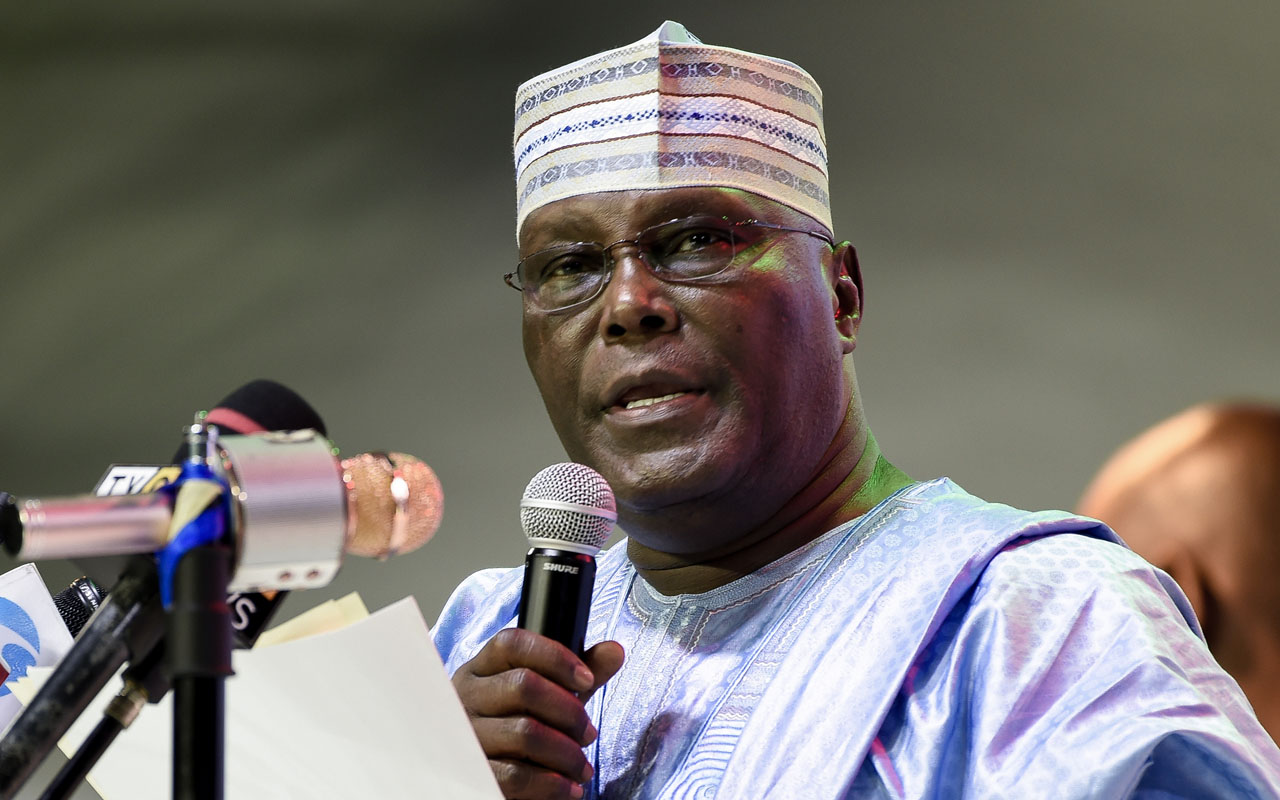
Former Vice President and African Democratic Congress (ADC) presidential candidate, Atiku Abubakar, has criticised President Bola Tinubu’s economic policies, accusing the administration of failing to retain foreign portfolio investments in Nigeria.
Atiku attacks Tinubu over foreign investments, describing the reported capital outflows from the Nigerian equities market as a sign that international investors are losing confidence in the country’s economy.
In a statement issued by his Senior Special Assistant on Public Communication, Phrank Shaibu, Atiku cited data from the Nigerian Exchange, which showed that foreign investors brought ₦513.36 billion into Nigeria’s equities market between January and July 2026.
During the same period, however, foreign investors reportedly withdrew ₦779.43 billion, resulting in a net outflow of ₦266.07 billion.
Atiku said the figures represented a sharp deterioration compared with the corresponding period in 2023, when the reported net outflow stood at ₦22.68 billion.
He also pointed out that foreign portfolio investment outflows exceeded inflows in each of the first seven months of 2026.
“This is not merely an investment statistic. It is a confidence verdict on the Tinubu economy,” Atiku said.
The former vice president compared the situation to a landlord whose tenants and customers are struggling financially while outside investors are taking their money elsewhere.
Atiku attacks Tinubu over foreign investments by arguing that the government should be more concerned about what investor behaviour says about the wider economy than about official claims of economic progress.
He further linked the reported investment outflows to rising government borrowing, warning that increased public-sector demand for domestic credit could place additional pressure on businesses.
Atiku referenced reports indicating that the Federal Government’s domestic borrowing increased by 90.5 per cent to ₦24.7 trillion within eight months. He argued that the trend, alongside faster growth in government credit compared with private-sector credit, could make it more difficult for businesses to access financing.
According to him, the combination of increased government borrowing and declining foreign investor exposure presents a worrying picture for Nigeria’s private sector.
He said the situation suggested that government borrowing was competing with businesses for available credit while international investors were reducing their exposure to Nigerian assets.
Atiku also criticised the administration over the continuing pressure on households and businesses, pointing to food prices, transportation costs and rising operating expenses.
He questioned whether the government’s economic reforms could be considered successful if businesses continued to face financing difficulties while households struggled with reduced purchasing power.
“What exactly is working?” he asked.
The ADC presidential candidate said investors were paying close attention to issues such as policy consistency, inflation, purchasing power, regulatory certainty and the possibility of achieving sustainable returns before committing funds to Nigeria.
He argued that the reported capital outflows should therefore serve as a warning to the government to reassess its economic strategy.
Atiku called for policies aimed at restoring investor confidence, lowering the cost of doing business and reducing energy and transportation expenses.
He also advocated a stronger focus on private-sector production, arguing that sustainable economic growth should be driven by productive businesses and improved household purchasing power rather than increasing government borrowing.
Atiku attacks Tinubu over foreign investments as he urged the Federal Government to create an economic environment capable of attracting and retaining both domestic and international capital.
He warned that Nigeria could struggle to position itself as an attractive investment destination if the private sector faces increasing pressure from government borrowing while consumers continue to experience declining purchasing power.
Read Also:https://e247mag.com/opposition-coalition-against-tinubu-atiku-obi-skip-summit/