


Nigerians are still paying high transport fares in many parts of the country as the Federal Government’s October 1 target for cheaper public transportation takes effect.
The government had promised that more commuters would begin to enjoy lower fares through the expansion of Compressed Natural Gas (CNG) and electric-powered transport. However, fresh reports indicate that the impact remains uneven across the country.
Limited CNG availability, inadequate refuelling infrastructure and high operating costs have continued to affect the rollout of the programme.
Transport fares remain high in many areas
The Federal Government had set October 1 as the target date for measurable reductions in transportation costs.
President Bola Tinubu previously said the government and state governors agreed to expand CNG and electric transport systems to reduce the burden on commuters.
However, the latest reports show that the expected reduction has not reached all commuters.
BusinessDay reported on Thursday that Nigerians continue to face expensive transportation despite the government’s target. It identified shortages in CNG infrastructure and other operational challenges as factors slowing the expected impact.
The Guardian also reported that infrastructure and implementation gaps could limit the nationwide impact of the fare-reduction programme.
Government expands CNG transport programme
The Federal Government has continued to increase investment in CNG-powered transportation.
Tinubu said more than 120,000 vehicles had been converted to CNG, while the country had more than 400 certified conversion centres and over 90 CNG refuelling stations.
The President also cited examples of cheaper fares already being offered through government-supported CNG and electric transport services.
In Kaduna, for instance, Tinubu said 100 CNG buses provide free transportation on major routes. He also cited fare reductions in states including Borno, Oyo, Adamawa, Enugu, Plateau, Niger and Abia.
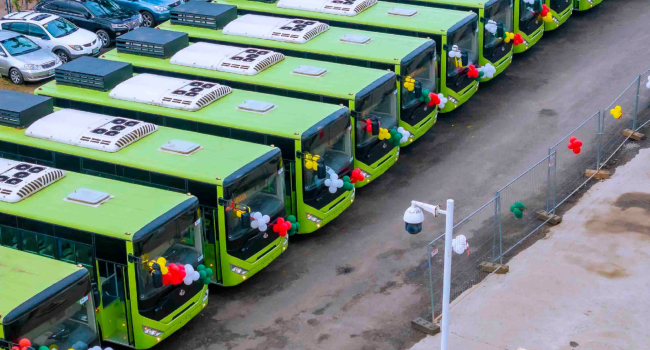
The Presidential Initiative on CNG and Electric Vehicles also delivered 20 high-capacity CNG buses to Lagos on September 30, a day before the October 1 target. The buses were handed over to the Lagos Metropolitan Area Transport Authority (LAMATA).
Read Also: States Deploy CNG Buses to Cut Transport Fares cng-buses-lower-transport-fares
What commuters should expect
The government’s objective is to ensure that savings from cheaper energy reach passengers through lower fares.
However, the pace of the rollout will depend on the availability of CNG, conversion facilities, refuelling stations and the participation of state governments and transport operators.
For many Nigerians, the key question now is whether the October 1 target will translate into sustained reductions in transport fares across major cities and inter-state routes.
The Federal Government has continued to urge states, transport unions and operators to accelerate the deployment of CNG and electric vehicles and pass the resulting savings on to commuters.