

 has confirmed that President Bola Tinubu was investigated in connection with drug)
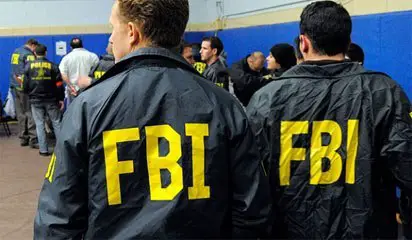
The United States Federal Bureau of Investigation (FBI) has confirmed that President Bola Tinubu was investigated in connection with drug-trafficking crimes in the early 1990s.
The disclosure was contained in a sworn declaration filed by the FBI on August 28, 2026, before the United States District Court for the District of Columbia in an ongoing Freedom of Information Act (FOIA) case seeking records related to Tinubu.
In the filing, the FBI said the records requested were compiled as part of an investigation involving multiple individuals suspected of drug-trafficking crimes.
The agency also noted that the court had previously determined that an official acknowledgement had been made regarding an investigation involving Tinubu.
The development followed an April 2025 ruling by US District Judge Beryl Howell, who ordered the FBI and Drug Enforcement Administration (DEA) to process non-exempt records connected to FOIA requests concerning Tinubu.
Judge Howell had ruled that the agencies could no longer rely on so-called “Glomar” responses to refuse to confirm or deny the existence of records relating to the investigation.
However, the ruling did not establish that Tinubu committed a drug-trafficking offence or that he was convicted of any crime.
The latest FBI declaration followed FOIA requests filed by American transparency activist Aaron Greenspan. Among the records sought were Tinubu’s FBI file and interview records from an FBI case dating to 1992 and 1993.
The requests are linked to efforts to obtain records concerning a Chicago heroin-trafficking operation that was active during the early 1990s.
The FBI has continued to withhold portions of the records, citing exemptions under US freedom-of-information laws. The exemptions cover issues including personal privacy, confidential sources, law-enforcement techniques and information that could potentially endanger individuals.
Political dispute over FBI records
The release of portions of the FBI declaration has triggered a political dispute in Nigeria ahead of the 2027 presidential election.
Von Batten-Montague-York, a Washington-based lobbying firm linked to former Vice-President Atiku Abubakar, publicised parts of the declaration and argued that the document contradicted claims that Tinubu had never been the subject of a criminal investigation.
The firm said it was reviewing records obtained from the FBI and releasing relevant portions to challenge what it described as inaccurate claims about Tinubu’s history.
However, the Presidency has dismissed the development as politically motivated.
Special Adviser to the President on Media and Public Communications, Sunday Dare, accused Atiku of using a US lobbying firm to generate controversy ahead of the 2027 election.
Dare described the campaign surrounding the documents as a “clinical demonstration of desperation” and argued that the FBI records did not amount to a new intelligence breakthrough.
He also questioned the representation of the lobbying firm’s statements as reflecting the position of the US government.
According to Dare, the FBI’s continued withholding of some records relates primarily to legal protections for investigative methods and confidential sources.
He further alleged that public US Foreign Agents Registration Act filings showed that Atiku contracted the Washington-based firm on a $1.2 million, 12-month retainer.
Dare said the opposition should instead focus on presenting Nigerians with policy alternatives and economic plans ahead of the 2027 election.
Tinubu lawyers oppose further disclosure
Tinubu’s legal team has opposed the further release of FBI records, arguing that the disclosure of personal information contained in government archives could violate his privacy rights.
The President’s camp has also maintained that the existence of an investigation should not be interpreted as proof of criminal liability.
The latest FBI filing therefore confirms that Tinubu was investigated in the early 1990s, but the document itself does not establish that he was convicted of drug trafficking or that he committed a drug-trafficking offence.
The controversy is likely to remain a political issue as Nigeria approaches the 2027 general election.
Read Also:https://e247mag.com/opposition-coalition-against-tinubu-atiku-obi-skip-summit/