


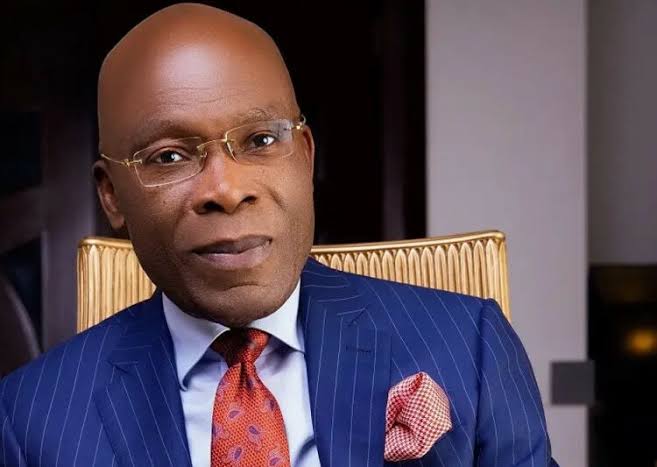
Zinox Group Chairman Leo Stan Ekeh has revealed the risks and personal sacrifices behind his decision to build a technology business in Africa when the industry was still largely undeveloped on the continent.
Speaking at the International Women Leadership Conference (TIWLC) in Dubai, Ekeh described his decision to pursue technology entrepreneurship as “corporate suicide” because few people believed Africa had a viable future in the sector at the time.
Ekeh delivered the keynote address on the conference’s final day under the theme “Losing the Fear”. The event, organised by the Ibukun Awosika Leadership Foundation, attracted more than 600 women leaders and industry professionals from different countries.
He recalled returning to Nigeria after studying Economics in India and finding that many of his contemporaries were pursuing careers in banking, oil and gas. Technology, he said, was largely regarded as a foreign industry with limited opportunities in Africa.
According to him, the prevailing attitude discouraged him from pursuing postgraduate studies in Computer Science in Europe. He was told that Africa might not need computers for another 35 years, a prospect that could leave him without meaningful career opportunities.
He subsequently studied Risk Management before enrolling for a Master’s degree in Business Law (LLM) at London Guildhall University.
However, his passion for technology entrepreneurship eventually took priority. He disclosed that he diverted money meant for his final law tuition fees into his business ambitions and consequently could not sit his final examinations.
Ekeh also revealed that international technology companies had attempted to recruit him before he decided to return to Africa.
Explaining his decision, he told the audience that he deliberately chose a path others were unwilling to take.
He said his parents and several people around him considered the decision extremely risky, but he believed technology could unlock enormous opportunities for Nigeria and the wider African continent.
The Zinox chairman also spoke about the difficult conditions he endured while building his business. He disclosed that he survived on one meal daily for more than three years and slept in a small room within his office.
How Leo Stan Ekeh Built an African Technology Identity
Ekeh said his ambition was to establish a recognisable Nigerian and African identity in the global technology industry.
He recalled launching his first company, Task Systems Limited, more than 35 years ago. The company pioneered desktop publishing and computer graphics in Nigeria.
At its launch event at the Sheraton Hotel in Ikeja, Lagos, he addressed a packed audience of industry leaders, many of whom were encountering computers for the first time.
He used the opportunity to emphasise the importance of technological independence, arguing that no country could achieve genuine independence without developing its own technology capabilities.
According to Ekeh, Nigerian media organisations supported his vision and helped promote the company’s growth.
He said this support contributed to the computerisation of more than 97 per cent of media and multimedia organisations in Nigeria and other African countries.
His ambition later informed the establishment of Zinox Technologies, which became one of Africa’s early Microsoft WHQL- and Intel-certified computer manufacturers.
Ekeh explained that the company was created to demonstrate that African businesses could manufacture computers that met international standards.
He said Zinox was not simply about producing computers but about establishing Africa’s capacity to compete in the global technology market.
Through its operations, he said, the company helped make technology more accessible in Nigeria and supported important projects across the country and other African markets.
However, he acknowledged that his entrepreneurial journey involved significant difficulties.
He described Nigeria as a country that had both blessed and bruised him, citing challenges such as controversial patronage, corporate blackmail and the pressures of operating a visible business in a difficult environment.
He argued that such experiences could discourage wealthy entrepreneurs from building businesses across Africa because of the difficulties involved in protecting their investments and defending their wealth.
Ekeh encouraged the women at the conference not to allow fear to determine their decisions.
He said the less-travelled path was often more difficult and lonely but could deliver worthwhile results.
He also promised to share the full details of his experiences in a forthcoming book expected before the end of 2027.
Zinox Group’s Investment in Women in Technology
Beyond his entrepreneurial journey, Ekeh highlighted the group’s efforts to increase women’s participation in the technology industry.
He said TD Africa Distributions Limited, one of the continent’s largest technology distribution companies, had trained more than 1,000 women through its TecHerdemy initiative.
The programme provides training in cybersecurity, artificial intelligence, software development, data science and professional etiquette.
According to him, many graduates have secured leadership positions across the technology industry.
He added that women also occupy important positions within the Zinox Group, with several female chief executives heading different business units.
Addressing the participants, Ekeh urged women to recognise their ability to transform industries, establish businesses and influence the future of the economy.
He emphasised that women must combine courage, competence and determination to overcome barriers, particularly in industries traditionally dominated by men.
The Zinox chairman also stressed that effective leadership should extend beyond personal success to creating opportunities for others.
His remarks reinforced the importance of women’s economic participation, leadership representation and access to opportunities in technology.
The conference, organised by the Ibukun Awosika Leadership Foundation, brought together women entrepreneurs, corporate executives and first-time managing directors from Africa and other parts of the world.