


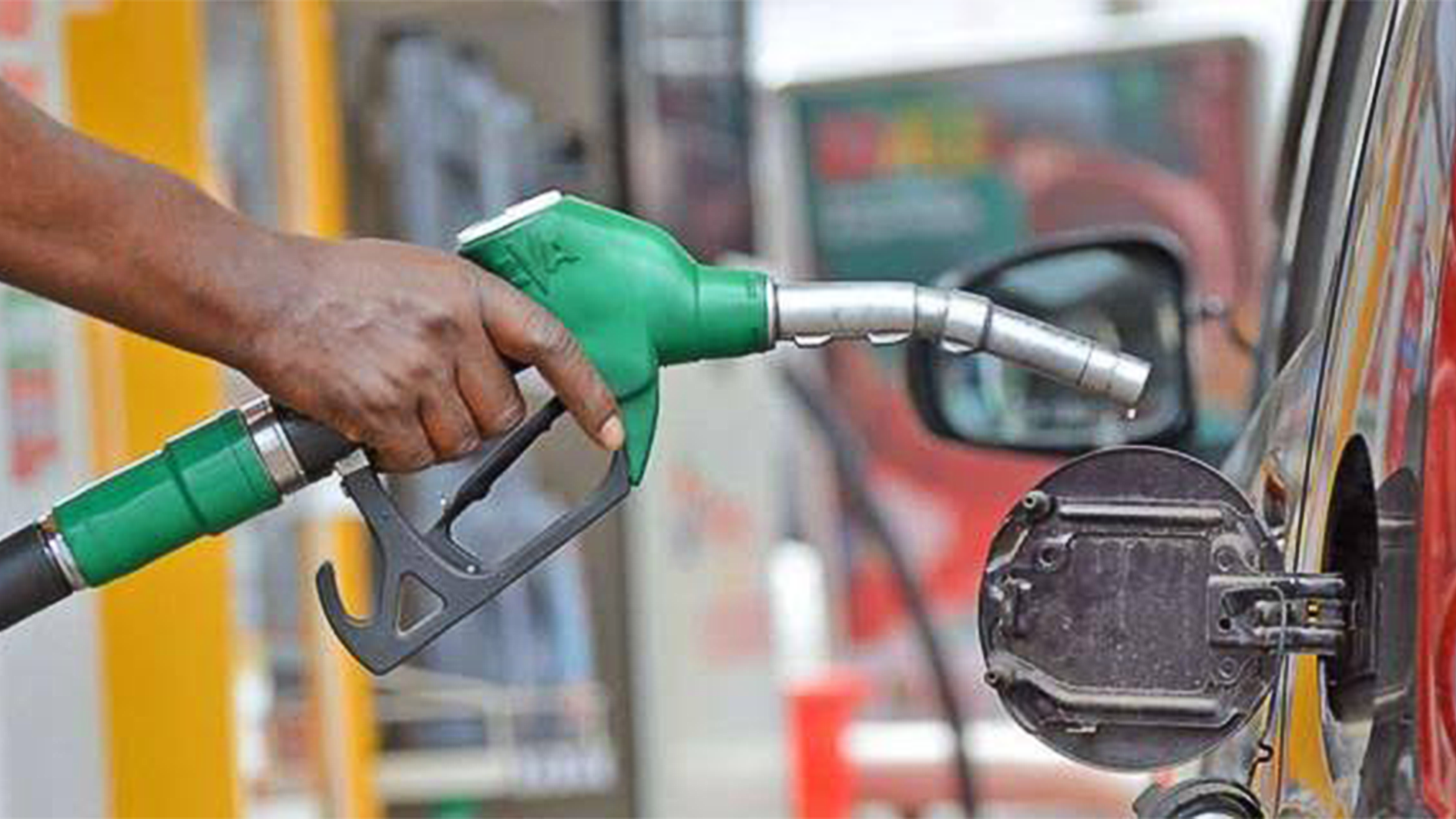
There is a point at which the cost of simply moving around becomes difficult to explain.
For me, that point came between September 10 and September 22.
On September 10, I bought petrol worth ₦90,259 for my car. Eight days later, the fuel warning light returned. I bought another ₦30,000 worth of petrol.
Four days after that, on September 22, the tank was empty again.
Another ₦91,137 went into the vehicle.
In 12 days, I had spent ₦211,396 on petrol.
That is an average of about ₦17,616 every day.
If that pace continued for 30 days, I would spend roughly ₦528,490 on petrol alone. In a year, the figure would climb to more than ₦6.4 million.
And what exactly am I buying?
Luxury?
No.
I am buying movement. I am paying for the privilege of getting to work, doing what needs to be done and returning home.
That is what makes the calculation frightening.
A friend looked at the figures and asked me a question that has refused to leave my mind: if getting to work consumes so much of what work pays, what is the reward for working?
When movement becomes a luxury
This is the real face of Nigeria’s petrol price crisis.
It is not just about what motorists see on the price board at filling stations. It is about what happens after the petrol has been bought.
Transport operators adjust their fares. Businesses spend more to move goods. Workers spend more getting to work. Traders pass higher logistics costs to customers.
Eventually, the petrol price finds its way into almost everything.
That is how a problem at the filling station becomes a problem in the kitchen.
For a worker, pensioner, trader or small business owner, the mathematics is becoming increasingly difficult.
How much income is left after transportation?
How much remains for food?
What happens to electricity bills, school fees, rent and medical expenses?
At what point does income become nothing more than money passing through a person’s hands on its way to someone else?
The petrol price crisis is therefore not merely a motorists’ problem. It is a household problem.
Where is the relief?
This brings me to government.
What exactly should citizens expect from the government when the cost of living becomes this punishing?
The government cannot control every event in the global oil market. That much is obvious.
But government can decide how it responds when external shocks begin to crush household incomes.
Other countries facing the current fuel-price surge have introduced different forms of relief.
France, for instance, has expanded targeted assistance for people who depend heavily on their cars for work. The French government announced an additional €450 million package and expanded eligibility for its fuel assistance programme from about three million people to 5.5 million. Support has also been extended to sectors such as farming, fishing and construction.
Germany has also moved to reduce the burden. From October 1 to December 31, 2026, its government is cutting energy taxes on petrol and diesel by about 14 cents per litre, producing relief of roughly 17 cents per litre when the associated VAT effect is included. The package is expected to provide about €2.5 billion in relief.
Britain has likewise maintained a temporary five-pence-per-litre reduction in fuel duty through December 2026.
These countries have not abolished the fuel crisis.
They have not discovered some magical cure for expensive oil.
They have simply recognised that when fuel prices put extraordinary pressure on citizens, government intervention can help cushion the blow.
What are we doing?
Nigeria has promoted CNG as an alternative to petrol and part of the longer-term response to the country’s transportation and energy problems.
That may have value.
But a man standing at a filling station today cannot pay today’s bill with tomorrow’s promise.
A woman whose transport fare has doubled cannot take a promise to the market.
A small business owner cannot hand a CNG policy document to a supplier and say, “Please accept this in place of payment.”
People need relief that reaches them in real life.
That is the difference between announcing a policy and making citizens feel its effect.
Read Also: States Deploy CNG Buses to Cut Transport Fares cng-buses-lower-transport-fares
The economics of survival
There is another problem that cannot be ignored.
When fuel consumes a larger portion of household income, people begin cutting other expenses.
Some reduce how often they travel.
Some stop visiting relatives.
Some postpone medical appointments.
Some reduce the quantity or quality of food they buy.
Some businesses shorten their operating hours because keeping the doors open becomes too expensive.
The consequences do not always appear immediately in economic statistics.
They appear quietly in people’s lives.
A country can celebrate stronger reserves, higher government revenue or other improvements in macroeconomic indicators while households are still struggling to afford basic necessities.
Both things can happen at the same time.
And that is why government must look beyond the numbers.
Nigerians were promised a better tomorrow
The argument for painful economic reforms has always been that today’s sacrifice should produce tomorrow’s prosperity.
But Nigerians have already paid the price of sacrifice.
The question now is: when does the benefit arrive?
The removal of petrol subsidy changed the economics of transportation almost overnight. The government said the old system was unsustainable and that the savings could be redirected towards development.
Citizens were asked to endure the pain.
But endurance is not an economic policy.
People can accept that reforms are difficult. What becomes harder to accept is hardship without a clear and convincing path out of it.
When citizens repeatedly hear that better days are coming, they are entitled to ask when those days will arrive.
Hope has its place.
But hope does not reduce a transport fare.
Hope does not fill a petrol tank.
Hope does not pay hospital bills.
The government must hear the noise
There is sometimes an expectation that citizens should remain quiet because the government says it is working.
But democracy does not require silence.
Citizens have the right to question policies that affect their lives.
Writers have the right to examine them.
Journalists have the responsibility to report their consequences.
And government has the responsibility to listen.
When people complain about hunger, transport costs or shrinking purchasing power, the answer cannot always be another sermon about patience.
A hungry person may appreciate hope, but hunger itself demands food.
A worker may believe in the future, but today’s journey to the workplace still has to be paid for.
The fire is spreading
The petrol price crisis is beginning to resemble a fire that keeps finding new material to consume.
It starts with the price of fuel.
Then it reaches transport.
From transport, it moves to food.
From food, it enters household budgets.
From household budgets, it affects businesses.
Eventually, the entire economy feels the heat.
That is why the response cannot be limited to telling Nigerians to endure.
If the government believes CNG is the long-term answer, then the transition must become faster, cheaper and more accessible.
If targeted support is possible, vulnerable households should be considered.
If tax or other fiscal measures can reduce the immediate pressure without creating bigger problems elsewhere, they should be examined.
If there are structural reasons why fuel remains so expensive, Nigerians deserve an honest explanation.
What they cannot afford is uncertainty.
We should not blame everything on the outside world
There is also a tendency to point to international conflicts whenever fuel prices rise.
Global events certainly matter.
The Middle East conflict and disruptions around the Strait of Hormuz have affected the international energy market and pushed fuel prices higher in several countries. Governments elsewhere have responded with measures designed to cushion their citizens from part of that pressure.
But global events cannot become a permanent explanation for every hardship Nigerians experience.
The question should always return to Abuja:
What can Nigeria do?
What can government control?
What can government subsidise?
What can government cut?
What can government accelerate?
And how can the most vulnerable people be protected while broader reforms continue?
Those are legitimate questions.
The people are running out of room
There is only so much that can be removed from a household budget before nothing is left.
Take away unnecessary spending.
Reduce entertainment.
Travel less.
Buy cheaper food.
Postpone repairs.
Delay medical treatment.
Cut business expenses.
Eventually, the arithmetic reaches its limit.
That is where many Nigerians now appear to be.
The country’s economic debate must therefore include the lived experience of citizens.
A worker who spends a large part of his income reaching work is not discussing economics in theory.
He is living it.
A trader whose customers can no longer afford transportation is not studying inflation.
She is experiencing it.
A family that has to choose between fuel and food does not need another lecture about patience.
It needs a way out.
Who will put out the fire?
The question before the government is not whether Nigerians understand that the economy faces serious challenges.
They do.
The question is whether the government understands how much pressure ordinary people are carrying.
At some point, the language of reform must give way to the language of relief.
At some point, promises must become results.
At some point, citizens must be able to look at their income and feel that it is enough to live, not merely enough to survive until the next payday.
That is why the petrol price crisis deserves more than political speeches and economic assurances.
It deserves practical action.
Because the fire is already burning.
It is burning through salaries.
It is burning through businesses.
It is burning through family budgets.
And for millions of Nigerians, the question is no longer whether there is a fire.
The question is:
Who is bringing the water?