


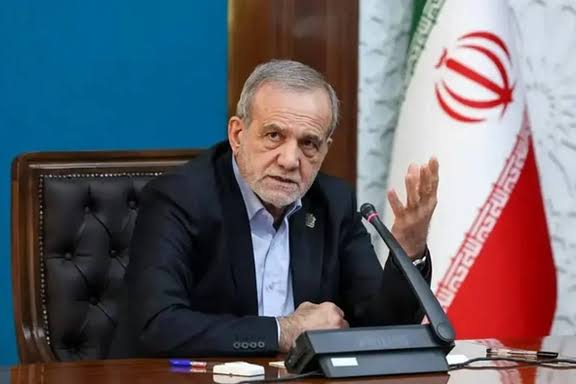
Iran’s political tensions have intensified as hardline factions opposing negotiations with the United States step up pressure on President Masoud Pezeshkian’s government.
The Paydari Front, also known as the Front of Islamic Revolution Stability, has urged Iran’s parliament and Supreme National Security Council to begin the process of withdrawing from the Nuclear Non-Proliferation Treaty (NPT).
The faction has also called for military efforts to advance as quickly as possible, a position widely interpreted as support for Iran pursuing nuclear weapons.
The move highlights a deepening struggle between Iranian officials who favour diplomacy to end the conflict with Washington and hardliners who believe Tehran should continue resisting US demands.
Iran Hardliners Reject Negotiations With Washington
The dispute comes amid the ongoing conflict that began after the United States and Israel launched military strikes against Iran on February 28, according to the report.
The fighting has damaged infrastructure across Iran and Arab countries, disrupted global energy supplies and severely affected shipping through the Strait of Hormuz.
Against this backdrop, Pezeshkian’s camp has continued to support diplomatic efforts, arguing that an agreement could help end the war and ease pressure on Iran’s struggling economy.
The Paydari Front, however, maintains that Washington cannot be trusted and that Iran should negotiate only after the United States lifts sanctions or ends restrictions affecting its southern ports.
Amirhossein Sabeti, a parliamentarian aligned with the faction, argued that the United States could launch another attack despite any diplomatic engagement.
He maintained that Iran should rely on strength rather than negotiations to protect its interests.
Hardliners Intensify Pressure on Pezeshkian’s Allies
Opposition to diplomacy has also appeared in public demonstrations across major Iranian cities.
For months, hardline supporters have held nighttime rallies that increasingly serve as organised protests against government officials seeking a negotiated end to the conflict.
Demonstrators have used slogans rejecting compromise with Washington and describing negotiations with the United States as a betrayal of Iran.
The movement also criticised Pezeshkian after his return from the United Nations General Assembly in September. Although the president condemned the US military campaign, he also defended diplomacy as a way to resolve the crisis.
Hardliners have also targeted Foreign Minister Abbas Araghchi. The Paydari-aligned faction has filed a motion seeking his impeachment following his visit to New York for the UN gathering.
Meanwhile, parliament is considering legislation that would criminalise interviews with foreign media outlets, another proposal that has raised concerns about the hardliners’ influence over public debate.
Iranian Moderates Continue to Push for Diplomacy
Despite the pressure, supporters of Pezeshkian’s government argue that negotiations remain necessary to prevent further destruction.
Journalist Davood Heshmati, who is considered close to the president, said diplomatic engagement should be exhausted before military action becomes the preferred option.
He argued that a lasting settlement would require an understanding with Washington that respects Iran’s territorial integrity.
Heshmati also questioned the hardliners’ opposition to reopening the Strait of Hormuz, arguing that their position risks prolonging a conflict without a clearly defined end.
For the government’s supporters, an agreement could provide a route out of the war while addressing Iran’s security concerns.
Hardliners Have Influence but May Not Control Final Decisions
Political analyst Negar Mortazavi described Iran’s hardliners as an established and well-organised force with the ability to mobilise supporters, influence political debate and pressure government officials.
However, she distinguished their political influence from the authority to make final decisions on war and peace.
According to Mortazavi, decisions on negotiations ultimately rest with Iran’s highest leadership and national security institutions. She argued that hardliners could complicate diplomatic efforts without necessarily having the power to block an agreement approved by the country’s main decision-makers.
She also pointed to previous nuclear diplomacy, including the Joint Comprehensive Plan of Action (JCPOA) and a more recent memorandum of understanding with the Trump administration, as examples of agreements that hardliners were unable to prevent.
Iran’s Political Rivalry Leaves Diplomacy Uncertain
The confrontation between the two camps is likely to remain a major factor in Iran’s response to the United States.
Hardline rallies and media campaigns against negotiations may continue, while efforts to secure a diplomatic settlement remain under discussion.
The reported delay in scheduling Araghchi’s impeachment hearing, alongside continued engagement with mediators, suggests that supporters of negotiations retain some influence within the political system.
Whether they can secure an agreement will depend on decisions at the highest levels of Iran’s leadership, as well as the positions taken by Washington and other parties involved in the conflict.