


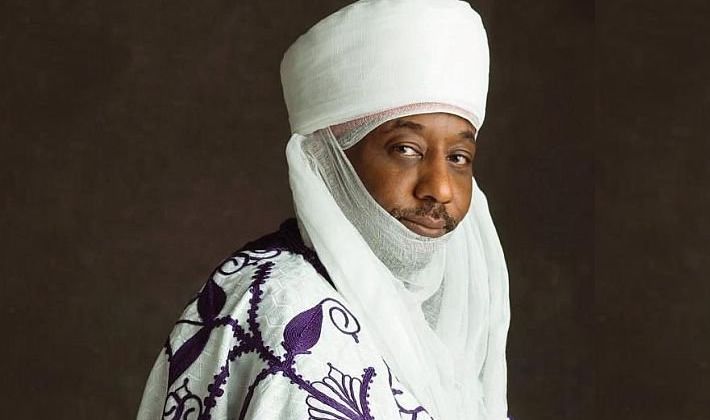
Former Central Bank of Nigeria (CBN) Governor Sanusi Lamido Sanusi has acknowledged a Sanusi CBN mistake from his time in office, saying he was wrong to delay telecommunications companies from entering Nigeria’s financial services sector.
Sanusi, who is now the Emir of Kano, made the admission in Abuja during the inauguration of the Access to Financial Services in Nigeria (A2F) 2026 Survey Report.
According to him, the decision was influenced by concerns about protecting depositors’ funds following the banking crisis that affected the country during his tenure.
He explained that he was uncomfortable allowing telecommunications companies that were outside the CBN’s primary regulatory control to handle significant amounts of customers’ money.
“I am responsible for delaying the entry of telcos into this space,” Sanusi said.
He added that, with the benefit of hindsight, the decision showed how policies introduced for legitimate reasons could still produce unintended consequences.
Sanusi noted that the rapid development of fintech companies and mobile-based financial services in subsequent years demonstrated that telecommunications firms could have helped expand financial inclusion much earlier.
The former CBN governor also commended later administrations of the apex bank for opening the financial services sector to telecommunications companies and fintech operators.
He said digital financial service providers have helped reach communities where traditional banks have limited physical presence.
“I think we have made more progress in the last few years than we did in the first one because the banks simply don’t have the boots on the ground. They don’t have the footprint to do it,” he said.
Sanusi Calls for New Approach to Financial Inclusion
Sanusi argued that the next stage of financial inclusion should go beyond simply increasing the number of Nigerians who can access banking and payment services.
He said regulators should examine the huge volume of transactions processed through fintech and payment platforms and find ways to turn part of those financial flows into savings, insurance and pension opportunities.
According to him, people do not necessarily need to make large contributions at once. Small deductions from everyday transactions could gradually accumulate into meaningful financial reserves.
Sanusi also called for stronger financial protection for low-income households, farmers and small businesses, warning that events such as market fires and poor harvests could wipe out years of savings and investment.
He urged the CBN, PenCom and the National Insurance Commission to work more closely on financial products that combine savings, pensions and insurance.
Inflation Remains a Major Threat
The Emir of Kano further stressed the importance of financial literacy, particularly in parts of Nigeria where access to formal financial services remains limited.
He said financial inclusion policies should take into account the different economic realities across the country rather than rely mainly on experiences from major urban centres.
Sanusi also warned that access to smartphones and digital financial platforms in cities does not necessarily reflect the situation in poorer communities.
For him, the real measure of financial inclusion should be whether households are able to build savings, obtain insurance, secure pensions and withstand unexpected economic shocks.
He maintained that controlling inflation is equally important because rising prices reduce the value of savings and make it harder for households to achieve financial security.
“There is no enemy to savings, no enemy to wealth that is bigger than inflation,” Sanusi said.
Reflecting on his time at the CBN, the Sanusi CBN mistake over delayed telco participation illustrates how regulatory decisions can have effects beyond their original intentions.
Sanusi said policymakers should now take advantage of Nigeria’s expanding digital financial infrastructure and transaction data to create financial products that fit naturally into the everyday economic activities of Nigerians.
Read Also:https://e247mag.com/nigerias-money-s…tight-cbn-policy/