


Nigeria portfolio inflows climbed by 18 per cent to $7.09bn in the second quarter of 2026, up from $6.03bn in the previous quarter, as foreign investors increased their exposure to long-term government debt securities.
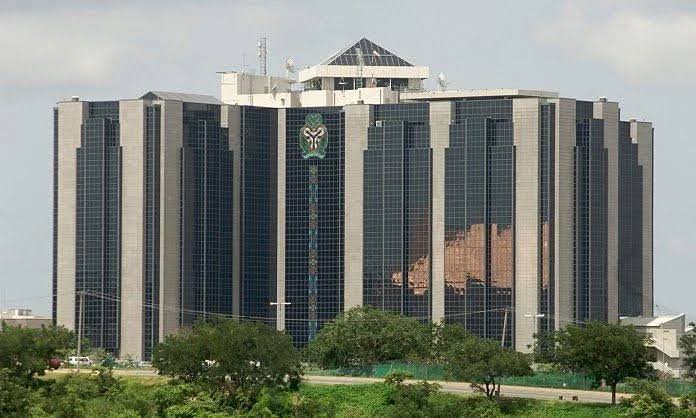
The Central Bank of Nigeria (CBN) disclosed the figures in its second-quarter 2026 Economic Report. It attributed the increase mainly to stronger foreign investment in long-term general government debt.
The rise in inflows coincided with an increase in Nigeria’s financial liabilities, which reached $10.84bn in Q2, compared with $8.36bn in Q1.
Portfolio investment covers foreign purchases of financial assets such as government bonds, treasury bills and company shares. The latest figures indicate that government debt securities attracted a significant share of foreign funds during the period.
Nigeria Portfolio Inflows Boost Financial Liabilities
The CBN report showed that other investment liabilities rose to $2.75bn in the second quarter from $1.36bn in the first three months of the year.
Higher loan drawdowns by the government and other sectors contributed to the increase. The growth also reflected higher currency and deposit liabilities among deposit-taking corporations.
Direct investment liabilities also increased, reaching $1.15bn from $1.03bn in the preceding quarter. The CBN linked the rise to higher reinvested earnings.
These movements contributed to the overall increase in Nigeria’s financial liabilities during the quarter.
Financial Asset Acquisition More Than Doubles
Nigeria also recorded a sharp increase in its acquisition of financial assets abroad and other external assets.
The value rose to $12.58bn in Q2 from $6.33bn in Q1, according to the report.
Other investment assets accounted for much of the increase, climbing to $7.96bn from $3.54bn. The CBN attributed the growth mainly to Nigerian residents increasing their holdings of foreign currencies and deposits.
Reserve assets also increased to $3.51bn from $2.38bn.
Meanwhile, portfolio investment assets rose to $700m from $260m. Deposit-taking corporations and other sectors contributed to the increase by acquiring more foreign debt securities.
Direct investment assets held by Nigerian residents also grew to $560m from $200m, largely because of higher equity investments.
The increase in asset acquisition helped shift the country’s financial account into a net lending position.
Financial Account Records $1.74bn Net Lending
Nigeria recorded net lending of $1.74bn in its financial account during the second quarter. The figure represented 1.96 per cent of gross domestic product (GDP).
This marked a reversal from the net borrowing position of $2.03bn, equivalent to 2.48 per cent of GDP, recorded in the first quarter.
The CBN report linked the turnaround mainly to increased acquisition of other investment assets and reserve assets.
The figures show that Nigeria’s external financial position changed significantly between the first and second quarters, even as the country recorded higher financial liabilities.
External Debt Rises to $54.52bn
Despite the stronger financial account position, Nigeria’s external debt stock increased to $54.52bn at the end of June 2026.
The amount compared with $51.90bn at the end of March, representing an increase of $2.62bn over three months.
The CBN attributed much of the increase to a $1.5bn Total Return Swap with First Abu Dhabi Bank and additional multilateral borrowing.
The report put Nigeria’s external debt at 16.67 per cent of GDP in the second quarter.
Multilateral loans accounted for the largest portion of the debt stock, reaching $24.76bn, or 45.42 per cent of the total. These loans came from international institutions, including the World Bank Group and the African Development Bank Group.
Commercial borrowings, which include Eurobonds and syndicated loans, stood at $23.26bn. This represented 42.47 per cent of the total external debt.
Bilateral loans from other governments accounted for the remaining $6.61bn, representing 12.12 per cent.
Together, multilateral and commercial borrowings made up nearly 88 per cent of Nigeria’s external debt at the end of June.
The CBN figures therefore show two parallel developments in Q2 2026: higher foreign portfolio investment and stronger acquisition of financial assets, alongside a rising external debt stock.