


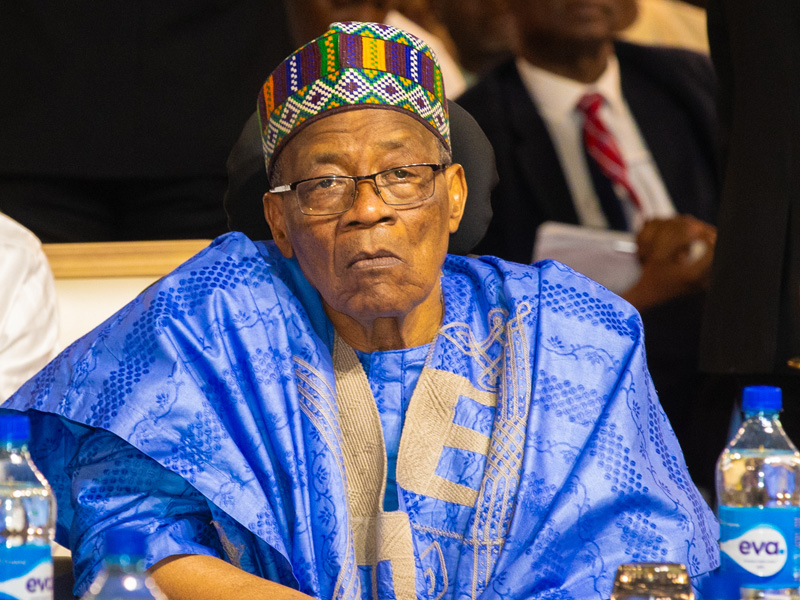
A survivor of the deaths of 37 suspected illegal miners in Nigeria Security and Civil Defence Corps (NSCDC) custody in Niger State has alleged that the gold-mining site where the miners were arrested was linked to former military Head of State, Ibrahim Badamasi Babangida.
The claim was made by Malam Babawo Tudun Nasera while recounting the arrest and death of his 17-year-old brother, Salim, who was among those detained by NSCDC officials.
According to Nasera, the miners were working at the site when security officials arrived and ordered them to stop. He alleged that the person he identified as the owner of the site had instructed them to continue with their activities.
When asked during an interview who owned the mining location, Nasera reportedly answered, “It belongs to Babangida,” and confirmed that he was referring to retired General Ibrahim Badamasi Babangida, popularly known as IBB.
He further alleged that Babangida had directed the miners to continue working at the site.
However, the allegation has been denied by Babangida.
In a response issued through his representative, Dr Danladi Umar Abdulhameed, the former military Head of State dismissed the claim as false and without foundation. He said Babangida had no connection with the mining operation and urged the public to disregard the report.
The IBB Niger mining allegation has emerged amid investigations into the deaths of 37 suspected illegal miners who were arrested during NSCDC operations in the M.I. Wushishi and Lukoto areas of Niger State on September 15 and 16.
There is currently no independent evidence establishing that Babangida owned the mining site or was involved in its operation. It is also unclear whether the survivor’s reference to ownership relates to the land, a mining licence, the operation itself or another form of association.
Nasera also spoke about the death of his younger brother, Salim, whom he identified as a 17-year-old miner.
He alleged that the detainees were kept in NSCDC custody for about three days despite efforts by families and associates to secure their release.
According to Nasera, the miners had gone to the area because mining provided a means of earning money and supporting their families.
He also questioned what happened to the detainees after they were taken into custody, saying they had eaten before the deaths were discovered.
Nasera further alleged that the detainees were given what he described as medicine and exposed to heat, but his account has not established the cause of death.
His testimony is one of several accounts emerging as authorities investigate the incident.
Other survivors have raised concerns about overcrowding and poor ventilation at the detention facility. Another survivor separately alleged that an unidentified substance was sprayed inside an overcrowded cell before some detainees collapsed. Those claims remain unverified and are part of the wider investigation.
The NSCDC initially referred to a suspected disease outbreak following the deaths, but authorities have said the specific cause has not been scientifically established.
Niger State Governor Umaru Bago confirmed that 37 detainees died in NSCDC custody and said medical, forensic and autopsy examinations were being conducted to establish what happened.
Read Also:https://e247mag.com/37-miners-deaths-nscdc-custody-peter-obi/
The Federal Government has also suspended 20 NSCDC officers in addition to the Niger State Commandant and established a 10-member independent committee to investigate the deaths. The committee has two weeks to complete its assignment and submit its report.
The Federal Ministry of Solid Minerals Development has separately deployed officials to Niger State to investigate the circumstances surrounding the incident.
Babangida has, meanwhile, condemned the deaths and expressed sympathy to the families of the victims, while calling for a comprehensive investigation.
The conflicting accounts over the mining site and the circumstances surrounding the deaths are now expected to form part of the investigations seeking to establish what happened and whether any individuals or institutions should be held accountable.