


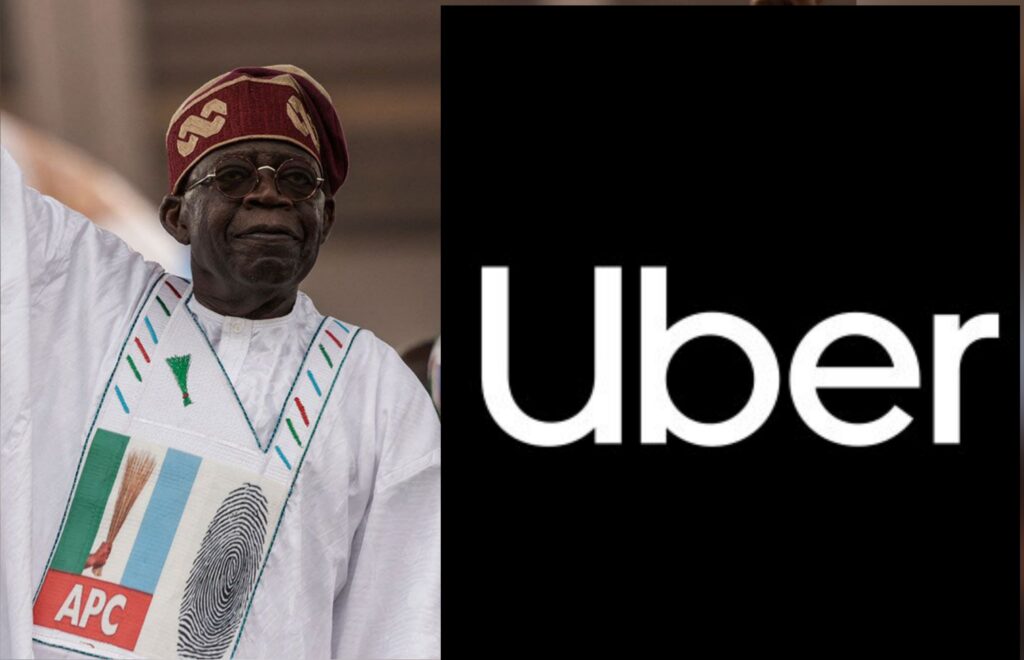
The Tinubu $1 trillion economy ambition has come under fresh scrutiny following Uber’s decision to leave Nigeria after 12 years of operations.
The development has renewed debate about the country’s economic growth, foreign investment climate and the ability of the federal government to attract and retain major international companies.
In an opinion article, Ikenna Asomba argued that Uber’s departure should be viewed within the wider challenges facing Nigeria’s economy rather than as an isolated corporate decision.
Nigeria’s record on economic growth
Asomba examined Nigeria’s economic performance since independence, noting that the country has recorded double-digit real GDP growth on only a handful of occasions.
He highlighted strong growth recorded between 1969 and 1974, as well as the 15.33 per cent expansion recorded in 2002 during the administration of former President Olusegun Obasanjo.
According to the writer, the economic expansion under Obasanjo was supported by a combination of reforms, banking-sector recapitalisation, pension reforms, telecommunications liberalisation and other policy measures.
He also pointed to the role of economic policymakers and technocrats who served during the period.
Read Also:https://e247mag.com/nigeria-ride-hailing-industry-uber-exit/
Tinubu’s $1 trillion target faces scrutiny
The writer questioned the feasibility of the federal government’s ambition to grow Nigeria’s economy to $1 trillion by 2030.
He argued that Nigeria’s current growth rate would need to increase substantially for the target to be achieved within the proposed timeframe.
The article referenced Nigeria’s reported 4.43 per cent real GDP growth in the second quarter of 2026 and argued that such a rate would not be sufficient to bridge the gap between the country’s current economic size and the $1 trillion target.
The writer further cited International Monetary Fund projections to argue that Nigeria’s economy could remain considerably below the $1 trillion mark under moderate growth scenarios.
However, nominal GDP targets expressed in US dollars can also be affected by exchange-rate movements and inflation, meaning that the path to a $1 trillion economy depends on more than real GDP growth alone.
Uber exit adds to investment concerns
Uber’s withdrawal has become another talking point in the debate over Nigeria’s investment environment.
The company entered the Nigerian market in 2014 and became one of the most recognised ride-hailing brands operating in the country before announcing its exit in 2026.
Asomba linked the development to a wider pattern of multinational companies reducing their Nigerian operations or leaving the market altogether.
He listed companies including Unilever, Procter & Gamble, GlaxoSmithKline, Shoprite, PZ Cussons, Kimberly-Clark and others among businesses that have either divested or scaled back their presence in Nigeria.
The article argues that multinational exits can have wider consequences through job losses, disrupted supply chains, reduced investment and lower government revenues.
Foreign investment remains a major concern
The writer also raised concerns about the level of foreign direct investment entering Nigeria, arguing that sustained economic growth requires an environment capable of attracting and retaining private capital.
According to the article, rising operating costs, currency volatility, inflation and other economic pressures have made Nigeria more challenging for some international businesses.
The debate has intensified as the federal government continues to promote reforms aimed at stabilising the economy and improving the country’s investment outlook.
Read Also:https://e247mag.com/uber-exit-nigeria-riders-safety-concerns/
Nigeria reach $1 trillion by 2030?
The central question remains whether Nigeria can achieve the Tinubu $1 trillion economy target within the government’s 2030 timeline.
Supporters of the government’s economic programme point to recent improvements in GDP growth and ongoing reforms as evidence that the economy is moving in the right direction.
Critics, however, argue that stronger and sustained growth would be required to reach the target, particularly if the naira remains under pressure against major international currencies.
The argument over the $1 trillion ambition is therefore likely to remain a major part of Nigeria’s economic and political debate ahead of the 2027 general election.
For the government, the challenge is not only to increase headline GDP figures but also to create an economy where businesses can expand, investors can commit capital and Nigerians can experience improvements in jobs, incomes and living standards.
Asomba ultimately argues that the government’s economic claims should be tested against measurable outcomes, including growth, investment, business activity and the performance of multinational companies operating in Nigeria.