


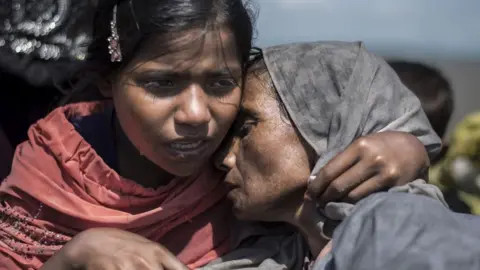
Myanmar is facing a landmark ruling at the International Court of Justice (ICJ) over allegations that its military committed genocide against the Rohingya Muslim minority during a brutal crackdown in 2017.
The court is expected to deliver its verdict on Thursday in a case brought by The Gambia in November 2019. The proceedings could mark a major turning point in international law, as no state has ever been found guilty of genocide by an international court.
The case centres on allegations of mass killings, rape, torture and the destruction of Rohingya communities in Myanmar’s Rakhine State. Hundreds of thousands of people fled across the border into neighbouring Bangladesh during the military operation.
The Gambia filed the case with backing from the Organisation of Islamic Cooperation (OIC), arguing that Myanmar violated the 1948 Genocide Convention.
A ruling against Myanmar could strengthen international accountability for genocide and formally recognise the suffering of the Rohingya people, who have endured years of persecution and displacement.
How the Rohingya Crisis Led to the ICJ Case
The crisis escalated in August and September 2017 when Myanmar’s military launched operations in Rakhine State.
The crackdown forced hundreds of thousands of Rohingya to flee their homes and seek refuge in Bangladesh. Survivors reported widespread killings, sexual violence, torture and the burning of entire villages.
Journalists, human rights organisations and a United Nations fact-finding mission documented extensive evidence of atrocities.
A 2018 UN report described the military’s response as grossly disproportionate to the security threats it claimed to face. It also called for investigations into senior military figures over alleged genocide and crimes against humanity.
Myanmar rejected the accusations, insisting that its forces conducted security operations in response to attacks by Rohingya militants.
The dispute eventually reached the ICJ, the United Nations’ highest court, after other international legal options proved difficult to pursue.
Why Proving Genocide Against Myanmar Is Difficult
Despite the extensive evidence of atrocities, establishing genocide remains a major legal challenge because international judges apply a particularly high standard of proof.
Under international law, prosecutors must establish not only that mass atrocities occurred but also that the perpetrators intended to destroy a national, ethnic, racial or religious group, in whole or in part.
Where there is no explicit order or programme to commit genocide, judges examine whether the available evidence supports genocidal intent as the only reasonable conclusion.
A previous case involving Bosnia-Herzegovina and Serbia illustrates the difficulty.
Bosnia filed a genocide case against Serbia at the ICJ in 1993. Fourteen years later, the court ruled that the 1995 Srebrenica massacre constituted genocide but found insufficient evidence that Serbia itself had the required genocidal intent. However, it ruled that Serbia had failed to prevent the genocide.
Myanmar’s defence has relied on similar arguments, insisting that evidence of possible war crimes does not automatically establish an intention to commit genocide.
Nobel laureate Aung San Suu Kyi also defended Myanmar during the initial proceedings at The Hague. She argued that The Gambia had misrepresented a complex conflict and the military’s security operations.
Her decision to defend the country attracted widespread criticism, particularly from people who had previously admired her democratic credentials.
Following the military coup in 2021, which removed her from power and led to her detention, a team appointed by the military took over Myanmar’s defence.
The Gambia Presents Evidence of Systematic Persecution
Arsalan Suleman, the lawyer leading The Gambia’s case, believes the evidence presented to the court establishes the necessary elements of genocide.
He said the legal team examined Myanmar’s long history of discrimination against the Rohingya, arguing that government policies and propaganda provided important context for the 2017 military operations.
The evidence reportedly included Myanmar’s 1982 citizenship law and other restrictions that limited Rohingya access to education, healthcare, employment and freedom of movement.
According to Suleman, these policies created conditions that made normal life increasingly difficult for the minority group and helped establish the alleged genocidal intent behind the military campaign.
He described a favourable ruling as a landmark development that could strengthen the 1948 Genocide Convention and international accountability for crimes committed by states.
What an ICJ Genocide Verdict Could Mean for Myanmar
A ruling against Myanmar would carry enormous legal and diplomatic significance.
It would mark the first time an international court has found a state responsible for committing genocide, setting a major precedent in international law.
Such a decision could also damage the international standing of Myanmar’s military leadership, particularly Min Aung Hlaing, who was responsible for the military operations in 2017.
However, an ICJ judgment does not automatically lead to punishment. The court has no criminal sentencing powers, and its decisions do not carry an automatic penalty.
There is also no right of appeal against an ICJ verdict.
Myanmar’s military leadership has focused largely on rebuilding relationships with neighbouring Asian countries. These governments may respond differently to the judgment from Western countries, which have maintained stronger criticism of the military.
Nevertheless, the ruling could increase diplomatic pressure on Myanmar and strengthen calls for accountability.
Rohingya Refugees Hope for Justice and Safe Return
For the Rohingya community, the case represents far more than a legal battle between two countries.
Mohammed Nowkim, a Rohingya refugee who fled Buthidaung in Rakhine State in 2017 and now lives in Canada, described the proceedings as an opportunity for the world to acknowledge years of suffering.
He said a favourable judgment would represent formal recognition of what the Rohingya people endured after years of denial.
Nowkim and other activists hope the ruling will encourage countries to coordinate efforts towards securing a safe return for displaced Rohingya families.
More than one million Rohingya remain in refugee camps in Bangladesh, particularly around Cox’s Bazar. Many face difficult living conditions, limited employment opportunities and declining international humanitarian support.
However, returning home remains complicated.
Rakhine State has suffered further destruction from fighting between Myanmar’s military and the Arakan Army, which now controls much of the territory.
The Arakan Army enjoys support among many members of the indigenous Rakhine population, some of whom strongly oppose the return of Rohingya refugees.
Several Rohingya communities have also lost their homes, with entire villages reportedly destroyed.
Consequently, even a historic judgment in the Rohingya genocide case may not immediately guarantee justice, safe resettlement or a return to their ancestral communities.
For millions of displaced Rohingya, however, the proceedings offer an important opportunity to secure international recognition of their suffering and renewed pressure for accountability.