


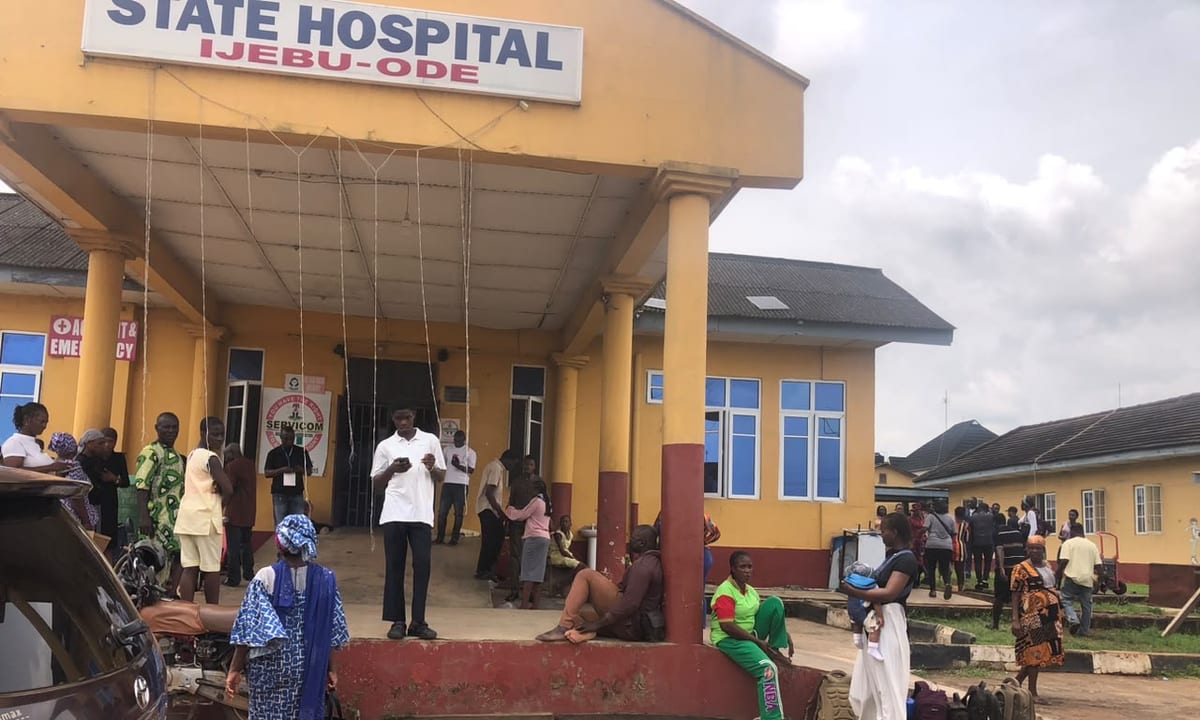
Several secondary school students have been hospitalised after a fresh gas emission affected communities in Ogun State, disrupting school activities and triggering panic among parents and teachers.
The incident occurred on Wednesday morning in Ijebu-Ode, Ijebu-Igbo and Ago-Iwoye. Students of Anglican Girls Grammar School in Obalende, Ijebu-Ode, including its public and private sections, were among those affected. Students of Ijebu-Igbo Girls Grammar School were also reportedly exposed.
Some of the affected students were taken to general hospitals in Ijebu-Ode and Ijebu-Igbo for medical attention. In Ago-Iwoye, the strong odour disrupted academic activities, forcing some schools to close early and send pupils home.
Parents, guardians and teachers reportedly rushed to hospitals to check on the condition of the students.
Ogun Government Links Emission to Underground Gas
The General Manager of the Ogun State Environmental Protection Agency (OGEPA), Kehinde Bello, said the latest incident was linked to underground gas emissions previously recorded in Ijebu-Ode since April 2026.
Bello, who visited affected areas in Ijebu-Ode and Ijebu-Igbo, said the state government was working to find a lasting solution.
According to him, investigations by the government indicated that the emissions were a natural phenomenon associated with geological and tectonic fault lines. He ruled out sabotage and a gas pipeline leak as the cause.
Bello also urged residents to remain calm, expressing confidence that the affected students would recover after receiving medical care.
Residents exposed to the odour were advised to cover their noses and mouths with wet handkerchiefs instead of wearing nose masks.
Recurring Gas Emissions Raise School Safety Concerns
The latest Ogun gas emission has renewed concerns about the repeated incidents and their effects on schools and children in the affected communities.
In June, the Ogun State Government attributed similar incidents in some Ijebu-Ode schools to natural underground processes. It also dismissed claims linking the emissions to spiritual explanations or security threats.
The state Commissioner for Environment, Ola Oresanya, said scientific investigations identified methane and sulphide gases as the major emissions escaping through underground fractures along established fault lines.
Oresanya explained that the affected areas lie along the Ifewara-Zungeru Trans-Atlantic fault line. The fault line stretches from Mojoda through Ijebu-Ode towards Osun and Niger states.
The latest incident has renewed calls for an effective, lasting response to protect students and residents from further exposure as investigations and government efforts continue.