


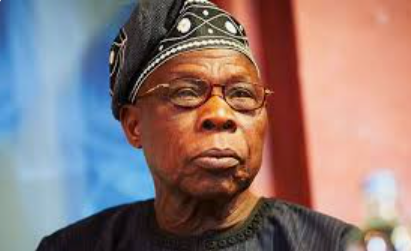
Former Nigerian President Olusegun Obasanjo has reiterated his long-standing position that the country’s state-owned refineries are unlikely to function effectively again, despite ongoing efforts by the Nigerian National Petroleum Company Limited to secure technical partners.
Speaking during a televised interview, Obasanjo emphasized that public-private partnerships remain the most viable path for managing large-scale national projects. He pointed to the success of Nigeria Liquefied Natural Gas as an example, noting that its majority private-sector ownership has helped shield it from the inefficiencies often associated with government-run enterprises.
Reflecting on his time in office, Obasanjo revealed that he once approached Shell to either acquire equity in or manage Nigeria’s refineries. However, the oil giant declined, citing limited profitability in downstream operations, the relatively small capacity of the facilities, poor maintenance practices, and concerns about corruption.
He explained that Nigeria’s refineries, including those in Port Harcourt, Warri, and Kaduna, fall short of global standards in both size and efficiency. According to him, industry benchmarks typically range between 250,000 and 300,000 barrels per day, significantly higher than Nigeria’s output.
Obasanjo also recounted a failed agreement involving Aliko Dangote, who had offered $750 million to acquire a controlling stake in two refineries. The deal was completed during Obasanjo’s administration but later reversed by his successor, Umaru Musa Yar’Adua, reportedly due to pressure from within the national oil company.
He expressed disappointment over the reversal, arguing that the refineries have since deteriorated further despite billions of dollars spent on rehabilitation. Obasanjo claimed that approximately $16 billion has been invested in the facilities—an amount close to what Dangote used to construct his large-scale private refinery.
Meanwhile, the current leadership of NNPC, under Bayo Ojulari, has acknowledged that the refineries are operating below global standards, making their output commercially uncompetitive, particularly when compared to newer private operations like Dangote’s refinery.
Despite setting a new target of June 2026 to finalize technical partnerships, uncertainty continues to surround the future of Nigeria’s refineries, with both Obasanjo and Dangote expressing skepticism about their long-term viability.