


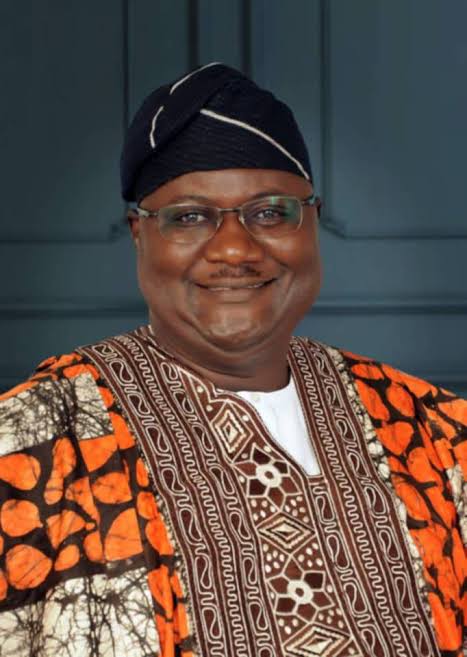
Labour Party House of Representatives candidate for Lafia/Obi Federal Constituency, Engineer Akaba Joshua Peter, has declared that the January 16, 2027 election presents an opportunity to end what he described as decades of political marginalisation of Obi Local Government Area in Nasarawa State.
Akaba said the constituency’s House of Representatives seat should move to Obi in the interest of fairness, equity and balanced representation.
He made the declaration during an interview with a correspondent in Lafia, where he described his political ambition as a battle between David and Goliath.
The candidate maintained that although some political opponents might underestimate his chances, he remained confident of victory.
“This is a battle between David and Goliath. They are looking at me as nobody, a child of nobody. I agree, but I am carrying only a sling and stone. When the time comes, we will hit Goliath on the 16th of January,” he said.
Akaba, who comes from Dudu Guru Ward, is the son of retired Very Rev. Peter G. Akaba, a trustee of the ERCC.
He said his decision to contest was driven by faith and a desire to serve rather than personal ambition.
The Labour Party candidate referenced Matthew 18:20 and Romans 8:31 to explain his confidence in the contest.
“I used to tell people jokingly that I’m contesting House of Representative under the book of Matthew, Matthew 18 verse 20 which says, ‘Where two or three are gathered in his name, he is in their midst.’ And that confirmation is Romans chapter 8 verse 31. If God is with us, who can be against us? So, God is with us,” he said.
He added that leadership comes from God and insisted that his ambition was not driven by selfish interests.
Akaba Demands Political Balance in Lafia/Obi Constituency
The candidate argued that residents of Obi and some communities in Lafia had not received adequate government attention.
He said many constituents had yet to enjoy the benefits of government projects and development initiatives in their communities.
Akaba also highlighted the ethnic diversity of Lafia/Obi Federal Constituency, which comprises groups such as the Mada, Alago, Koro, Kanuri and Gwandara.
According to him, the different communities should enjoy fair political representation rather than allowing one area to dominate elective positions.
Akaba, who identifies with the Koro ethnic group, said his people had supported other communities in previous political contests.
“For fairness, equity, and justice, Koro people have supported Alago. They have supported Gwandara. They have supported Igon. They have supported Kanuri,” he said.
He traced the constituency’s political history to 1999, when Suleiman Yusuf from Mararaba Ward contested with support from Obi.
He also mentioned Danladi Almakura, who served from 2003 to 2011, Dr Joseph Haruna Ikpe, who represented the constituency from 2011 to 2015, and Hon. Sarki Dahiru, who served for 12 years.
Akaba further cited former Senator Solomon Adokwe, who represented the area in the Senate for 12 years.
He argued that Obi had not produced a senator or House of Representatives member under the political arrangement he described.
The LP candidate also noted that the incumbent House of Representatives member from Lafia was seeking a Senate seat.
He questioned why both the Senate and House of Representatives positions should remain in Lafia if the incumbent secured the senatorial ticket.
“Time has come that the House of Representative seat is going to Obi, not Lafia again,” he declared.
Akaba acknowledged other contestants from Obi, including Dalla of the Peoples Democratic Party (PDP), Hon. Ogbele of the Nigeria Democratic Congress (NDC), and Dr Anzaku of the New Nigeria Peoples Party (NNPP), who hails from Getare.
However, he maintained that Lafia should allow Obi to produce the next representative.
Akaba Unveils Four-Point Development Agenda
Speaking on his plans for the constituency, Akaba presented a four-point development blueprint covering agriculture, education, youth and women empowerment, and infrastructure.
He said the programme would address some of the challenges affecting rural communities and improve access to essential services.
1. Agriculture and Support for Farmers
Akaba identified agriculture as his first priority, describing Lafia/Obi as an agrarian constituency with many residents depending on farming.
He said farmers struggle to purchase fertilisers and herbicides because of limited financial resources.
He also complained that agricultural inputs often arrive late, preventing farmers from using them during the appropriate planting seasons.
The candidate identified himself as a professional farmer with experience in cultivating yam, rice, maize, beans and groundnuts.
He said his experience had given him an understanding of the different farming seasons and when farmers require fertilisers, herbicides and tractors.
Akaba promised to push for better agricultural support to increase local production.
“I want to move Lafia/Obi from consumption to production. Because when you look at it, we consume more than what we produce and it’s not enough for us because we don’t have support of government,” he said.
2. Education and School Rehabilitation
On education, Akaba raised concerns about the condition of public schools in several villages across the constituency.
He alleged that many primary schools have dilapidated buildings, inadequate facilities and classrooms where children sit on bare floors.
He mentioned communities such as Fadama Bauna, Dhibel, Agwata, Adudu, Ajaragu, Musha and Takalafia as areas facing educational infrastructure challenges.
The candidate criticised what he described as the decline in educational standards compared with the opportunities available to previous generations.
He said his administration, if elected, would prioritise the rehabilitation of schools and improve learning conditions.
Akaba stressed that children in rural communities deserved comfortable classrooms and access to quality education.
3. Youth and Women Empowerment
The third component of his agenda focuses on creating opportunities for young people and women.
Akaba expressed concern over the number of qualified graduates who remain unemployed for years after completing their education.
He said many young people possess university degrees and professional knowledge but lack opportunities to apply their skills.
To address the situation, he proposed skills acquisition programmes and greater support for entrepreneurship.
He also disclosed plans to sponsor a bill for the establishment of a Centre for Entrepreneurship in Agwatu.
According to him, the proposed centre would provide opportunities for graduates to develop practical skills, establish businesses and engage in productive activities.
He said many young people leave their communities for places such as Benin, where some resort to commercial tricycle and motorcycle operations to earn a living.
Akaba also promised to support women interested in business through microfinance institutions and corporate partnerships.
He said access to financial assistance would help women establish and expand small businesses instead of remaining economically inactive.
4. Infrastructure and Healthcare Development
Infrastructure forms the final part of Akaba’s proposed development agenda.
He listed bridges, culverts, drainage systems, hospitals and community clinics among the facilities he wants to improve.
The candidate expressed concern that several rural health centres were either non-functional or lacked the facilities and personnel required to serve residents.
He argued that communities could not achieve meaningful development without accessible healthcare services.
Akaba said his background as a production engineer would help him contribute to infrastructure development if elected to the National Assembly.
He also questioned the quality and cost of some projects in rural communities, arguing that certain structures described as bridges were merely culverts.
He cited the routes linking Kaba Two Men, Kaba Gwede and Kaba Dudu Gurung as examples of locations requiring improved crossing infrastructure.
According to him, constructing appropriate culverts and bridges would help farmers transport their harvests from farms to their homes and markets.
He further stressed the importance of functional clinics and hospitals, particularly for emergencies involving snakebites, childbirth complications and other medical conditions.
Akaba said his overall goal was to bring government projects and essential services closer to residents of Lafia/Obi Federal Constituency.
He maintained that agriculture, education, employment opportunities, infrastructure and healthcare would remain central to his proposed representation.