

 has sparked a major political shift,)
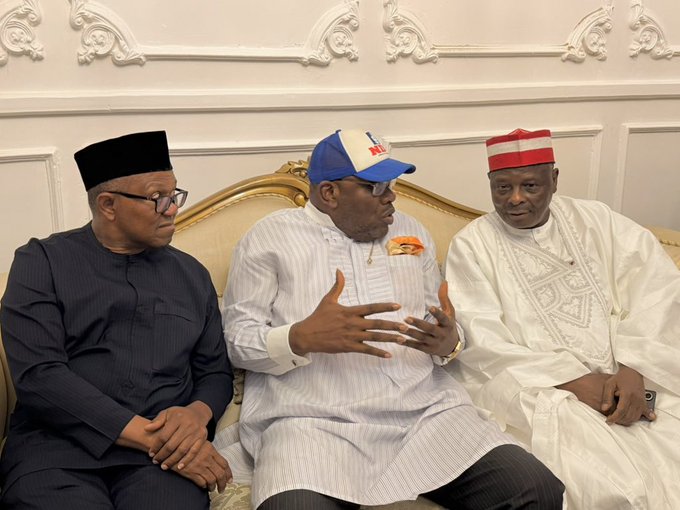
The departure of Peter Obi and Rabiu Kwankwaso from the African Democratic Congress (ADC) has sparked a major political shift, weakening the party’s presence in the National Assembly and strengthening the National Democratic Congress (NDC).
Within days of their exit, the NDC recorded significant gains, welcoming 17 members of the House of Representatives and one senator. This followed an earlier boost when Bayelsa West Senator Seriake Dickson defected from the Peoples Democratic Party (PDP) to the NDC.
The wave of defections came shortly after Obi and Kwankwaso formally joined the NDC, a move widely seen as a catalyst for the ongoing realignment in Nigeria’s opposition politics ahead of the 2027 general elections.
Lawmakers from several states—including Kano, Anambra, Lagos, Edo, Rivers, and Kogi—cited internal instability within the ADC as the main reason for their exit. During plenary, Deputy Speaker Benjamin Kalu noted that the defectors pointed to unresolved crises within the party, stretching from the ward level to the national leadership.
Among those who joined the NDC are Yusuf Datti, Sani Adamu, Zakari Mukhtari, Kamilu Ado, Harris Okonkwo, George Ozodinobi, Lilian Orogbu, and several others across multiple states. In a separate move, Kogi lawmaker Leke Abejide defected to the ruling All Progressives Congress (APC).
Political observers interpret the coordinated defections as a demonstration of loyalty to Obi and Kwankwaso, both of whom command strong regional influence in the South-East and North-West, respectively. Their exit from the ADC appears to have triggered a chain reaction among their supporters and political allies.
The ADC’s internal crisis, which has lingered for months, is rooted in leadership disputes, strategic disagreements, and competing ambitions among top figures. Efforts to form a unified opposition coalition reportedly collapsed due to mistrust and disagreements over zoning and party control.
Now viewed as a more stable alternative, the NDC has quickly emerged as a rallying platform for opposition figures seeking structure and direction. The ADC, on the other hand, has seen its representation in the House of Representatives drop sharply—from 24 members to just six.
The PDP has also experienced a decline in legislative strength, dropping from 116 members at the inauguration of the 10th National Assembly in 2023 to 29 members currently.
Reacting to the developments, Senate President Godswill Akpabio described the ADC as “dead,” following the latest defections. He also criticized the frequent party switching among lawmakers, suggesting that defections should be announced in batches rather than individually.
Meanwhile, Senator Victor Umeh confirmed his move to the NDC, attributing his decision to persistent internal conflicts and legal battles within the ADC. He noted that instability within political parties continues to drive frequent defections in Nigeria.
The realignment has extended beyond the National Assembly. In Kano, members of the Kwankwasiyya movement have begun leaving the ADC, with key figures already joining the NDC. A recent meeting between Kwankwaso and NDC leaders in the state reportedly resolved leadership disputes, consolidating his influence within the party.
Similarly, in Anambra State, more than 23 aspirants and several party members have either defected or are considering leaving the ADC, largely due to the ongoing leadership crisis and Obi’s departure.
Despite the wave of exits, the ADC leadership insists it remains strong. The party’s National Publicity Secretary, Bolaji Abdullahi, downplayed the defections, stating that the party’s credibility is not determined by the number of lawmakers.
At the state level, the ADC in Rivers also maintained that its structure remains intact, emphasizing that its strength lies in grassroots support rather than individual politicians.
As political alignments continue to shift, the growing influence of the NDC signals a significant reconfiguration of Nigeria’s opposition landscape, with potential implications for the 2027 elections.