

 has pushed back against demands for the removal of its chairman,)
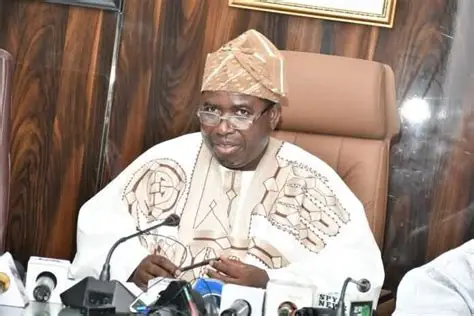
The Independent National Electoral Commission (INEC) has pushed back against demands for the removal of its chairman, Professor Joash Amupitan (SAN), while clarifying concerns surrounding its proposed nationwide voter revalidation exercise.
In a statement released Thursday night in Abuja by the Chief Press Secretary to the chairman, Adedayo Oketola, the Commission said it had taken note of recent criticisms from political figures accusing it of bias and calling for the chairman’s removal following its decision to comply with a Court of Appeal ruling.
INEC maintained that while individuals and groups are free to express opinions, its structure and leadership are firmly rooted in the Constitution. It emphasized that the appointment and removal of its chairman and national commissioners are governed strictly by Section 157 of the 1999 Constitution (as amended), and not subject to the influence of political actors.
According to the Commission, any attempt to remove its leadership outside constitutional provisions undermines its independence and distracts from its mandate.
Explaining its compliance with the Court of Appeal judgment, INEC said the decision was necessary to avoid legal complications similar to past cases in Zamfara and Plateau states, where elected officials lost their positions due to failure to obey court orders. It also referenced an existing court directive aimed at preserving ongoing proceedings at the Federal High Court.
INEC noted that engaging with the faction of the African Democratic Congress led by David Mark would have violated that order. It added that the Commission had only recognised Mark’s executive committee in September 2025, days after the matter had already been taken to court.
The Commission further stressed that rulings from appellate courts are binding on all authorities, citing constitutional provisions that mandate compliance and enforcement of such judgments.
Responding to claims that it is weakening Nigeria’s multi-party system, INEC dismissed the allegations, pointing to the recent recognition of new political parties—including the Democratic Leadership Alliance, Nigeria Democratic Congress, and National Democratic Party—which has brought the total number of registered parties to 22.
On internal party conflicts, INEC reiterated that it would not interfere in disputes within political parties, stating that such matters should be resolved internally without dragging the Commission into them.
Addressing the voter revalidation exercise, INEC described it as a routine administrative process aimed at improving the credibility of the voter register. It clarified that the exercise is not a new voter registration but a nationwide effort to verify existing records, eliminate duplicate entries, and update information, including records of deceased voters.
The Commission also assured that the process would be conducted uniformly across the country, supported by digital tools to make participation easier.
INEC said its current priority remains the preparation for the upcoming off-cycle governorship elections in Ekiti State (June 2026) and Osun State (August 2026), stressing that it would not be sidetracked by what it described as baseless accusations.
Reaffirming its commitment to due process and the rule of law, the Commission concluded that calls for the chairman’s resignation are unwarranted and misplaced.