


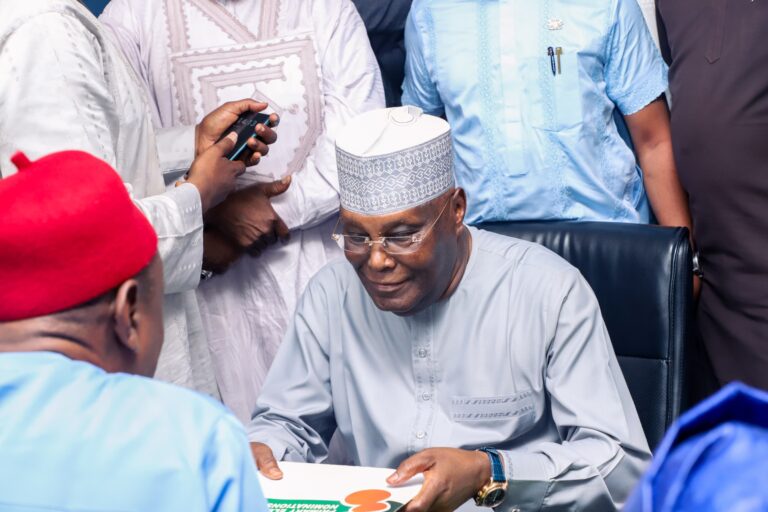
Former Vice President Atiku Abubakar and former Minister of Transportation Rotimi Amaechi on Thursday formally submitted their presidential nomination forms at the national headquarters of the African Democratic Congress in Abuja, signaling a major step in the party’s preparations for the 2027 general election.
The development comes amid growing political realignments as the ADC continues to attract influential political figures ahead of the next presidential contest.
Speaking after submitting his form, Atiku described his ambition as part of a wider national movement focused on restoring hope and rebuilding the country. In a statement shared via his X account, the former vice president said the mission went beyond politics and was aimed at rescuing Nigeria from hardship and uncertainty.
He urged Nigerians across all ethnic, religious, and regional backgrounds to unite behind the movement, expressing confidence that the country could regain stability and prosperity through collective effort.
Amaechi also declared his intention to contest under the ADC platform, promising to transform the country within four years if elected president.
The former Rivers State governor stressed that Nigerians should base their voting decisions on competence, leadership experience, and track records rather than ethnic or regional considerations. According to him, the 2027 election should serve as a referendum on performance among those seeking office.
Amaechi argued that his years in public service first as governor of Rivers State and later as Minister of Transportation under former President Muhammadu Buhari had equipped him with the experience needed to lead the country effectively.
He pointed to infrastructure projects executed during his tenure at the transport ministry, including the Abuja-Kaduna and Lagos-Ibadan railway lines, as evidence of his capacity to deliver results, despite criticisms surrounding the debt tied to some of the projects.
The former minister also criticised the administration of President Bola Tinubu, blaming the current economic hardship on policies driven by political entitlement and regional sentiment.
According to Amaechi, the “it is our turn” style of politics had contributed to the nation’s present difficulties, insisting that Nigerians should now prioritize merit and capability when choosing their next leader.