


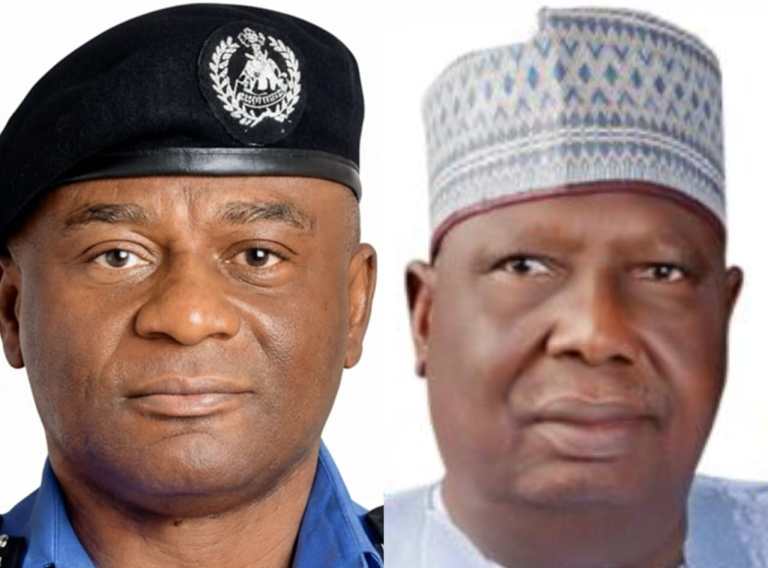
Following his decoration by Bola Ahmed Tinubu, Olatunji Ridwan Disu has formally taken over as Nigeria’s 23rd indigenous Inspector-General of Police, setting the stage for a sweeping reorganisation within the top hierarchy of the Nigeria Police Force (NPF).
Disu replaces Kayode Adeolu Egbetokun, who stepped down on February 24, 2026, citing health and family considerations. His emergence comes at a pivotal time for the Force, amid growing calls for improved professionalism, transparency and public confidence in policing.
Attention has now shifted to the Police Service Commission (PSC), which is expected to review the status of more than 25 senior officers. In keeping with long-standing practice in Nigeria’s security institutions, when a relatively junior officer rises to the top position, officers senior by rank or date of promotion often retire to preserve command structure stability.
Sources indicate that several Deputy Inspectors-General of Police (DIGs) occupying key portfolios may be affected. Among them are:
* DIG Frank Mba (Training and Development)
* DIG Sadiq Idris Abubakar (Force Criminal Investigation Department)
* DIG Adebowale William (Information and Communication Technology)
* DIG Bzigu Yakubu Kwazhi (Operations)
* DIG Adebola Ayinde Hamzat (Logistics and Supply)
* DIG Basil Idegwu (Research and Planning)
* DIG Dankwara Adamu Mohammed (Finance and Administration)
* DIG Mohammed Usaini Gumel (Force Intelligence Department)
In addition, at least 17 Assistant Inspectors-General of Police (AIGs) promoted ahead of Disu may also be considered for retirement, subject to PSC approval. This review aligns with institutional protocols designed to prevent rank-related conflicts at the highest command levels.
Disu, born April 13, 1966, would ordinarily have retired in April 2026 upon turning 60. However, provisions in the amended Police Act 2020 grant the Inspector-General a single four-year tenure, irrespective of age or years of service. Subject to confirmation by the Senate and the Nigeria Police Council, this means Disu could remain in office until 2030.
Meanwhile, several AIGs within his promotion cohort of March 6, 2025, are already approaching mandatory retirement thresholds — either reaching 60 years of age or completing 35 years of service.
Widely described as a “scholar-officer,” Disu brings notable academic credentials to the role, including master’s degrees in Entrepreneurship and Criminology and Security Studies, as well as a bachelor’s degree in English Education.
Throughout his career, he has held significant operational roles. As Commander of the Rapid Response Squad in Lagos, he revitalised the unit’s anti-crime strategy. He later led the Intelligence Response Team, served as Commissioner of Police in Rivers State and the Federal Capital Territory, and most recently functioned as AIG in charge of the Force CID Annex in Alagbon, Lagos.
Upon assuming office, Disu pledged to enforce discipline, promote human rights compliance and adopt a zero-tolerance stance on corruption.
According to him, impunity within the Force will no longer be tolerated, and officers will be retrained to uphold democratic policing standards. He emphasised that the police must remain accountable to citizens, reaffirming that law enforcement exists to serve the public rather than partisan interests.
As the PSC deliberates on the future of affected senior officers, the Nigeria Police Force appears set for a significant restructuring that could reshape its leadership dynamics and operational focus in the years ahead.