


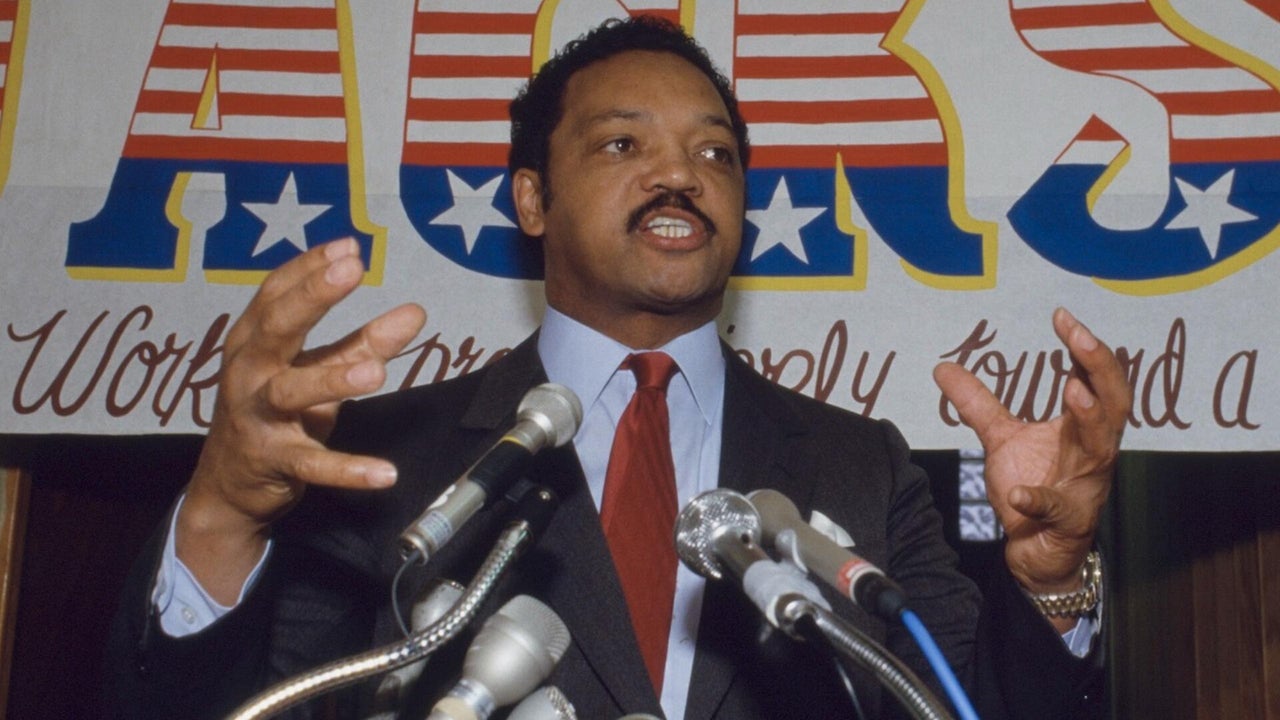
The Rev. Jesse Jackson, a towering and often polarizing figure who carried the civil rights movement from the streets into the national political arena, has died at 84, his family announced Tuesday.
While Jackson first rose to prominence marching alongside Martin Luther King Jr. his enduring impact may be measured in how he expanded that movement’s reach — building multiracial political coalitions, pressing corporate America to hire and invest more equitably, and twice mounting historic bids for the presidency.
Jackson died peacefully surrounded by family, according to a statement. In recent years, he had faced significant health challenges, including Parkinson’s disease — disclosed publicly in 2017 — and a later diagnosis of progressive supranuclear palsy, a rare degenerative neurological disorder.
From the movement’s front lines to national politics
Born in Greenville, South Carolina, in 1941, Jackson emerged from humble beginnings to become one of the most recognizable voices in American public life. After studying at the University of Illinois and later graduating from North Carolina A&T State University, he left theological studies in Chicago to join King’s campaign for racial justice.
Jackson was present in Memphis in April 1968 when King was assassinated at the Lorraine Motel — a moment that marked both a personal loss and a turning point. In the years that followed, he moved beyond King’s inner circle and forged his own path.
He founded Operation PUSH (People United to Save Humanity) in Chicago, focusing on economic empowerment and corporate accountability. In 1984, he launched the Rainbow Coalition, an ambitious effort to unite Black, Latino, labor, poor white, and progressive voters into a single political force. The organizations later merged as the Rainbow PUSH Coalition, which Jackson led for decades.
Redefining who could run for president
Jackson’s presidential campaigns in 1984 and 1988 were watershed moments. Though he did not secure the Democratic nomination, his 1988 run captured nearly 7 million votes and won several primaries and caucuses — an unprecedented achievement for a Black candidate at the time.
His campaigns registered millions of new voters and helped reshape the Democratic Party’s platform, pushing issues such as voting rights enforcement, sanctions against apartheid South Africa, and expanded social programs into the mainstream.
Even critics acknowledged that Jackson altered expectations about who could compete for the nation’s highest office. Two decades later, when Barack Obama was elected president in 2008, Jackson was visibly moved. He later reflected on the generations of sacrifice — from Medgar Evers to King — that made that moment possible.
Diplomacy without a title
Though he never held elected office, Jackson often operated as an informal diplomat. He negotiated for the release of hostages and political prisoners abroad, met with foreign leaders, and advocated for Washington, D.C., statehood as a self-described “shadow senator.”
In 2000, President Bill Clinton awarded him the Presidential Medal of Freedom, the nation’s highest civilian honor, recognizing his decades of activism.
A complex and enduring legacy
Jackson’s career was not without controversy. An antisemitic remark during his 1984 campaign drew widespread criticism and required public apologies. Tensions with fellow civil rights leaders and political figures sometimes marked his ascent. Yet supporters argue that his willingness to challenge entrenched systems — political, economic, and social — defined his leadership.
His family described him as a “servant leader” whose life’s work centered on justice and equality. He is survived by his wife of more than 60 years, Jacqueline, their children, and a broad network of activists and political leaders shaped by his mentorship.
Public observances are expected to be held in Chicago, the city where Jackson built his base and from which he projected his influence nationwide.
In the arc of modern American history, Jackson stands as a bridge figure — linking the moral urgency of the 1960s civil rights struggle with the ballot-box politics that followed, and expanding the definition of political possibility along the way.